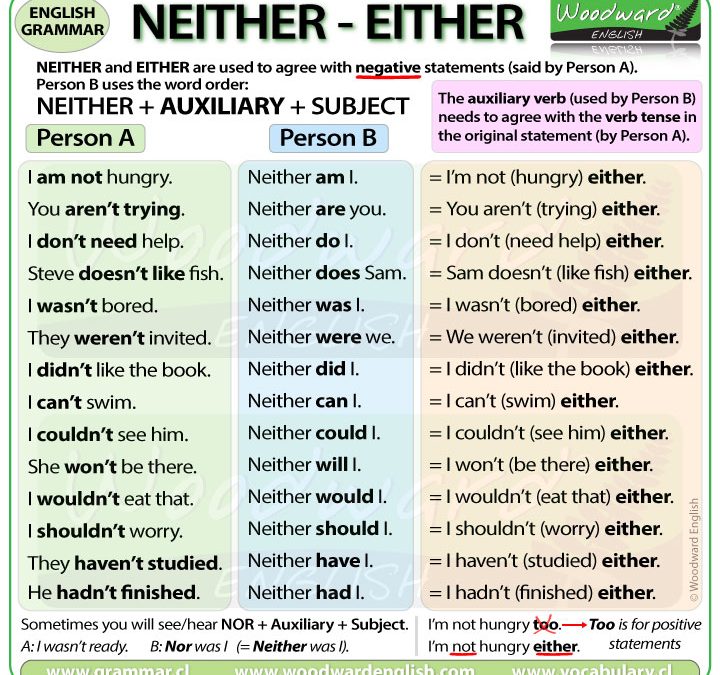
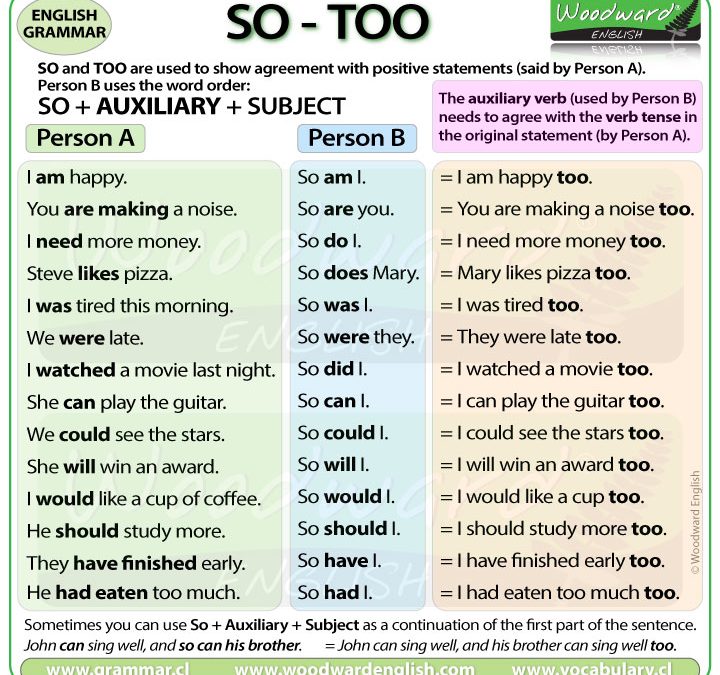
 SO – TOO – English Grammar Lesson Person A: I am happy. Person B: I am happy too. Too is used to show agreement with a positive statement. Too appears at the END of a sentence. Too means also. I am happy too. = I am also happy. Too can also mean in a similar...
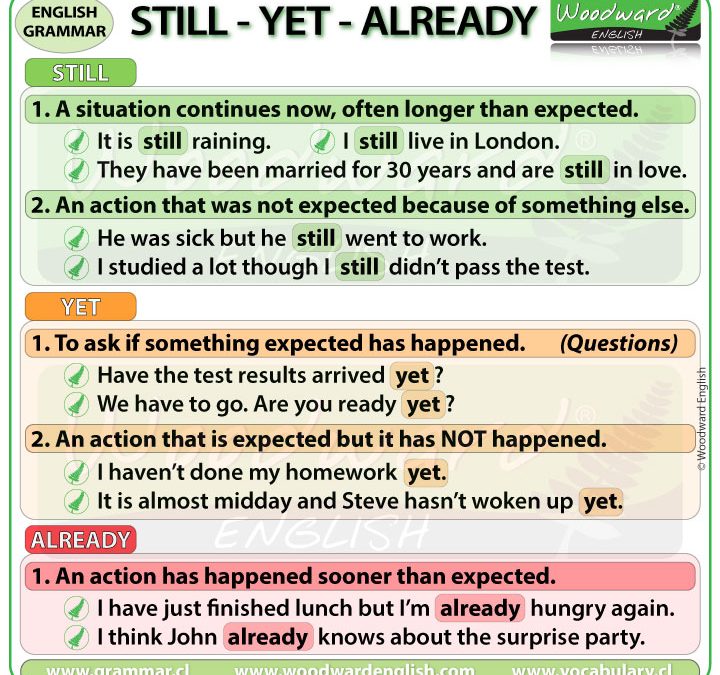 Still, yet and already are adverbs of time. Let’s look at the different meanings and uses of each adverb. STILL Still can refer to a situation that continues because it hasn’t finished or stopped. Sometimes this situation has continued longer than expected or the...
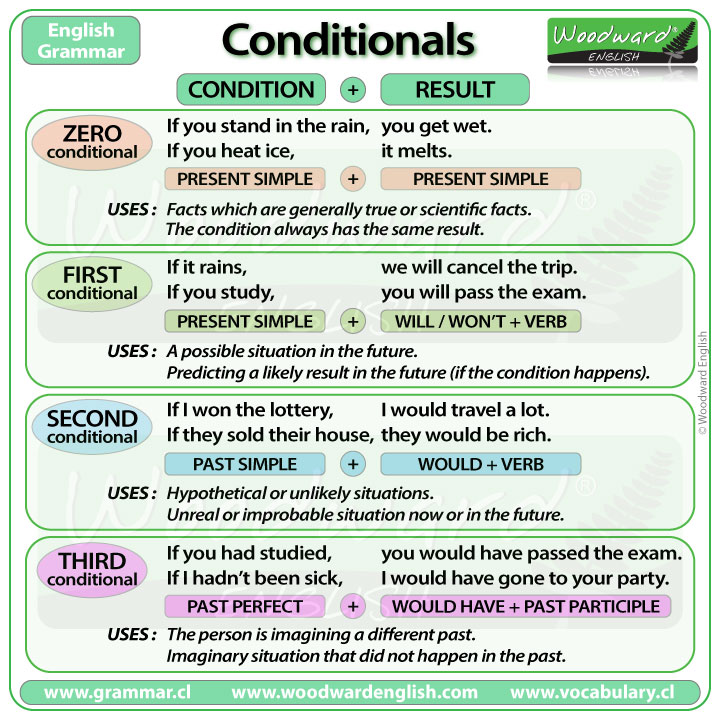 Conditional Sentences and IF clauses – Introduction Conditional sentences consist of two parts: The if-clause (which is a condition) and the main clause (which is a result) For example: If it rains, we will cancel the trip. If it rains …. is the if-clause (the...
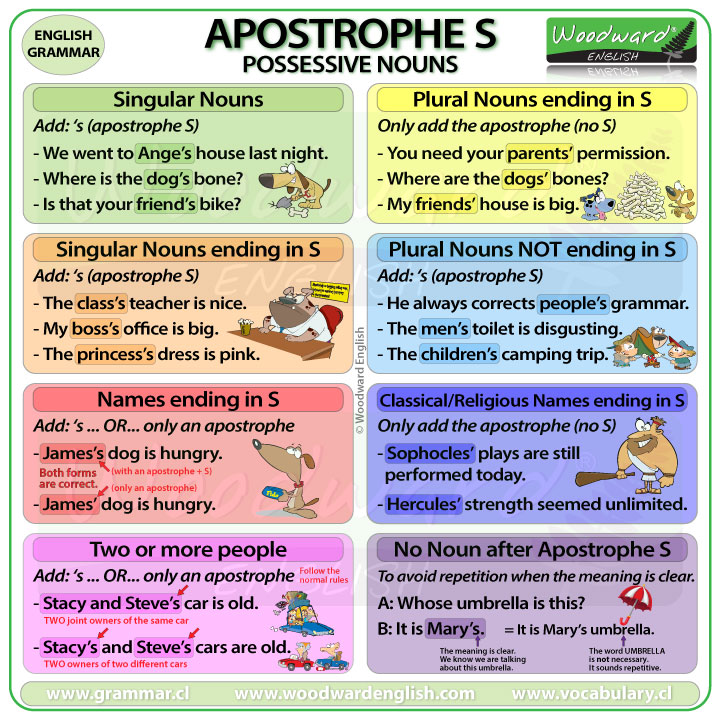 Apostrophe S – Meanings and Uses Look at these three short sentences. John’s tall. John’s studied. John’s car. What do they have in common… apart from the name John? They all have an apostrophe S at the end of John. What does an apostrophe S mean? The apostrophe...